Tuesday, March 3
The Drunk at the MicroLED Lamppost
Nikhil Balram, CEO, Mojo Vision
Abstract:
Light-emitting diodes (LEDs) are well established as high brightness, high efficiency light sources. MicroLEDs extend these advantages through extreme miniaturization, enabling entirely new classes of applications – from massively parallel optical interconnects for AI infrastructure to ultra-compact displays for AI glasses. However, realizing this potential requires far more than tiny LEDs. It demands an integrated platform spanning CMOS backplanes, GaN devices, quantum-dot materials, advanced optics, chemistry, software, and system design tools. This talk explores the technical architecture behind Mojo’s microLED platform, the system-level challenges of scaling it, and why it always makes sense to look for your solutions at the microLED lamppost.
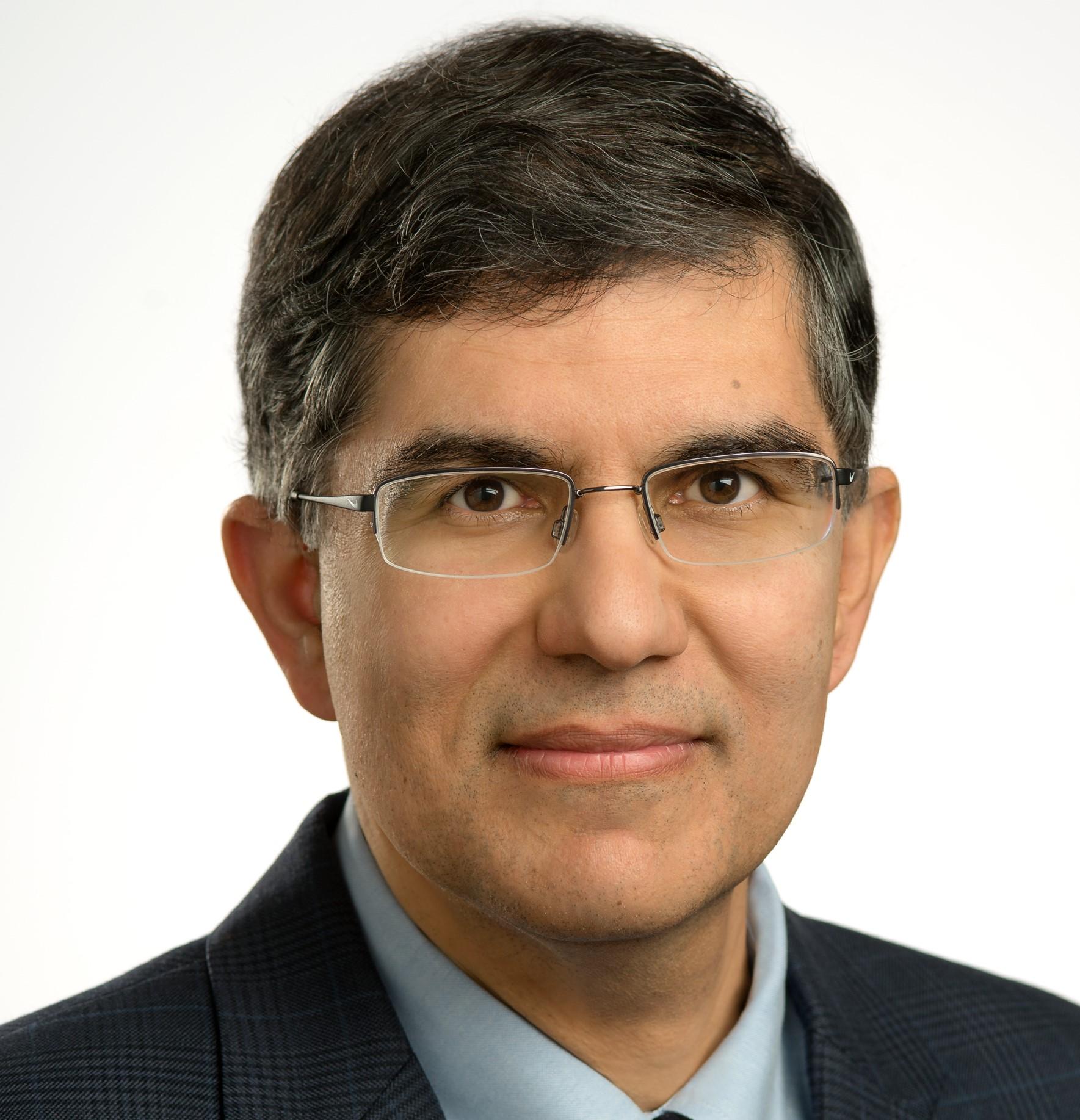 Nikhil Balram has over 30 years of experience across a broad set of industries including semiconductor, display, consumer electronics, healthcare, defense, and enterprise. He is currently CEO of Mojo Vision, a Silicon Valley start-up pioneering a highly flexible, vertically integrated microLED platform that enables breakthrough products such as AI glasses and next-generation optical interconnects for AI data centers. Past executive roles include head of the display group at Google, where he was responsible for developing display systems for all Google consumer hardware; CEO of Ricoh Innovations Corporation; VP/GM of Digital Entertainment BU at Marvell Semiconductor; and CTO of the display group at National Semiconductor. Products and technologies developed by teams he led won over a dozen major awards including a Technical Emmy. He has received numerous awards including the Otto Schade Prize, the Gold Stevie® Award for Executive of the Year in the Electronics category, and an Alumni Achievement Award from Carnegie Mellon University (CMU). He has more than 130 US and international patents granted or pending and over 75 technical publications, including three invited book chapters. Balram is a Fellow of SID and was general chair for Display Week 2021 and program chair for Display Week 2019. He has been a visiting professor of vision science at University of California, Berkeley, and is currently a guest professor of design & innovation at the Indian Institute of Technology (IIT Gandhinagar) and an adjunct professor of electrical engineering at CMU. He received his BS, MS, and PhD in electrical engineering from CMU.
Wednesday, March 4
Vera C. Rubin Observatory and the Legacy Survey in Space and Time
Andrew Peter Rasmussen, Stanford University
The Legacy Survey in Space and Time will commence in the very near future. The Survey will be acquired by the dedicated Vera C. Rubin Observatory located on a mountaintop in Chile and will record 1/3 of the southern sky every night for 10 years. Images are acquired in 6 bands spanning near UV through the near infrared, with atmosphere-limited image quality through active optic compensation.
High-cadence, repeated measurements in precise spectral bands open up a vast discovery volume of the transient sky (and time-critical transient alerts) while allowing strong reduction of faint sensitivity limits for the background sources populating the quiescent sky.
I will describe design and operational features of Rubin and of the Camera, the path toward its completion and how we will cope with 20 TB of original image data (per night).
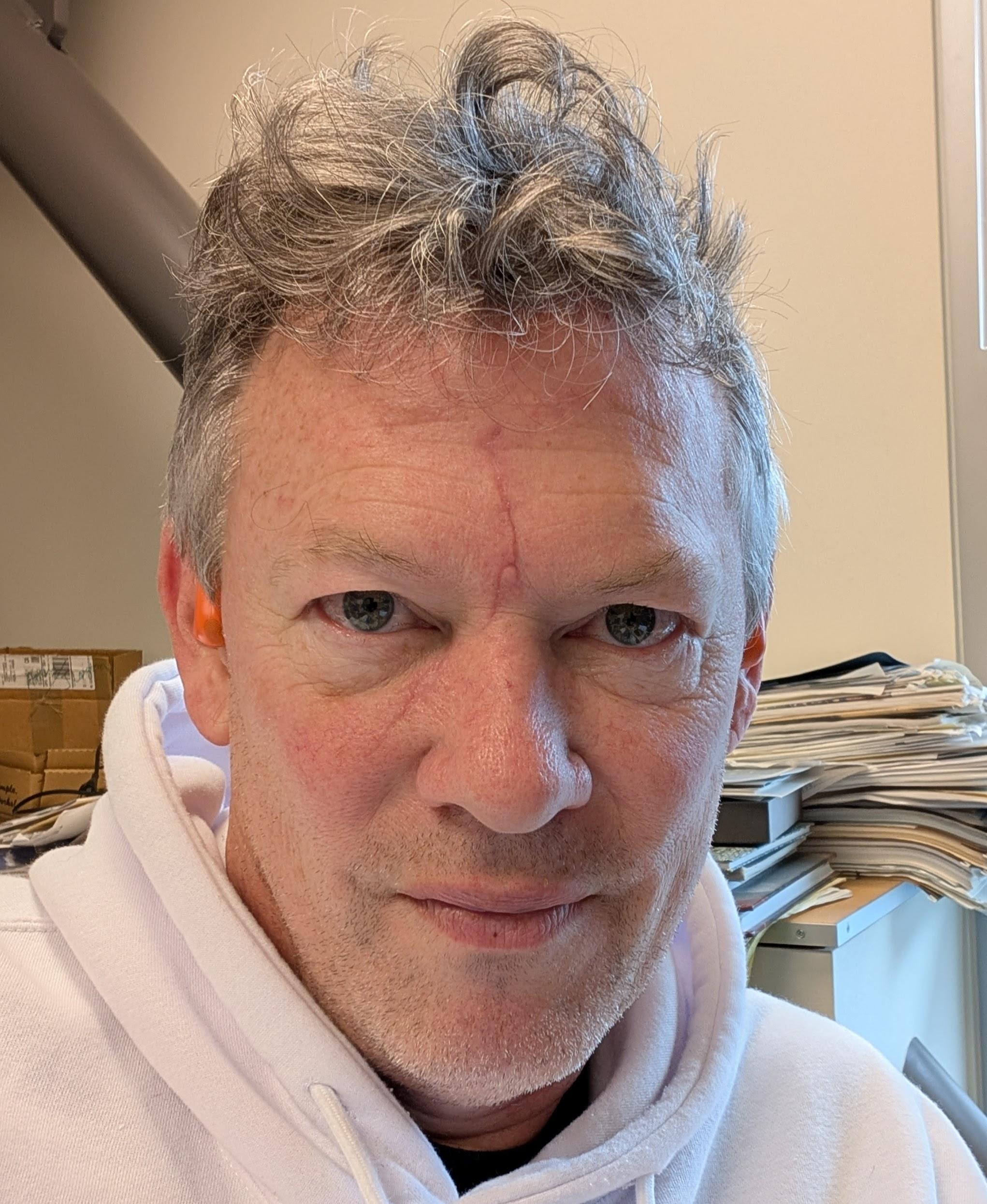 Andrew Rasmussen (he/him/his) is a staff physicist and experimental astronomer at SLAC National Accelerator Laboratory, having served in Camera Scientist and Camera Integration & Testing Scientist roles, over the years, for Rubin Observatory's Camera. Prior to this, at Columbia University's Astrophysics Lab he worked to design, build and deploy the X-ray grating array modules for the Reflection Grating Spectrometer aboard the European Space Agency's XMM/Newton Observatory. At MIT he developed characterization methods for using CCDs as broad-band imaging spectrometers used aboard NASA's Chandra X-Ray Observatory and ISAS's ASCA. For his PhD thesis he cut his teeth on a sounding rocket-borne, far-ultraviolet long-slit spectrometer to unambiguously identify and measure highly ionized interstellar medium pervading the Milky Way.