EI has always been the place to hear from those in the electronic imaging field who are pushing the limits and challenging what we know. We bring you speakers who educate and inspire. We are pleased to present this year's plenary speakers and their talks:
Monday February 3
Imaging In the Age of Artificial Intelligence
Peyman Milanfar, distinguished scientist, Google  View Talk
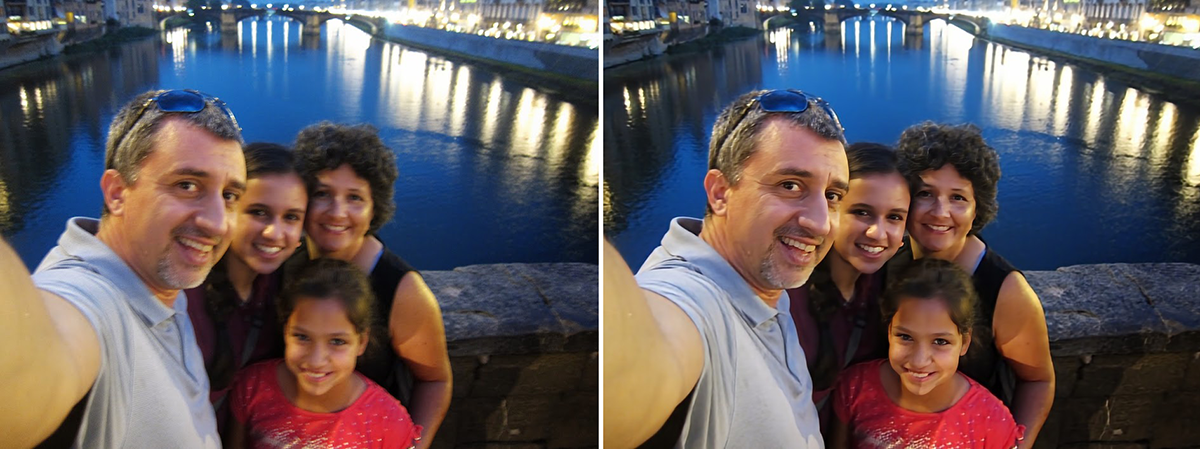
Abstract: AI is revolutionizing imaging, transforming how we capture, enhance, and experience visual content. Advancements in machine learning are enabling mobile phones to have far better cameras, enabling capabilities like enhanced zoom, state-of-the-art noise reduction, blur mitigation, and post-capture capabilities such as intelligent curation and editing of your photo collections, directly on device.
This talk will delve into some of these breakthroughs, and describe a few of the latest research directions that are pushing the boundaries of image restoration and generation, pointing to a future where AI empowers us to better capture, create, and interact with visual content in unprecedented ways.
 Peyman Milanfar is a Distinguished Scientist at Google, where he leads the Computational Imaging team. Prior to this, he was a Professor of Electrical Engineering at UC Santa Cruz for 15 years, two of those as Associate Dean for Research. From 2012-2014 he was on leave at Google-x, where he helped develop the imaging pipeline for Google Glass.
Over the last decade, Peyman's team at Google has developed several core imaging technologies that are used in many products. Among these are the zoom pipeline for the Pixel phones, which includes the multi-frame super-resolution ("Super Res Zoom") pipeline, and several generations of state of the art digital upscaling algorithms. Most recently, his team led the development of the "Photo Unblur" feature launched in Google Photos for Pixel devices.
Peyman received his undergraduate education in electrical engineering and mathematics from the UC Berkeley and his MS and PhD in electrical engineering from MIT. He holds more than two dozen patents and founded MotionDSP, which was acquired by Cubic Inc.
Along with his students and colleagues, he has won multiple best paper awards for introducing kernel regression in imaging, the RAISR upscaling algorithm, NIMA: neural image quality assessment, and Regularization by Denoising (RED). He's been a Distinguished Lecturer of the IEEE Signal Processing Society and is a Fellow of IEEE "for contributions to inverse problems and super-resolution in imaging".
Tuesday February 4
Holographic Displays: Past, Present, and Future
Grace Kuo, research scientist, Display Systems Research, Meta View Talk
 Abstract: Holograms have captured the public imagination since their first media representation in Star Wars in 1977. Although fiction, the idea of glowing, 3D projections is based on real-world holographic display technology, which can create 3D image content by manipulating the wave properties of light. However, in practice, the image quality of experimental holograms has significantly lagged traditional displays until recently. What changed? This talk will delve into how hardware improvements met ideas from machine learning to spark a new wave of research in holographic displays. We’ll take a critical look at what this research has achieved, discuss open problems, and explore the potential of holographic technology to create head-mounted displays with glasses-form factor.
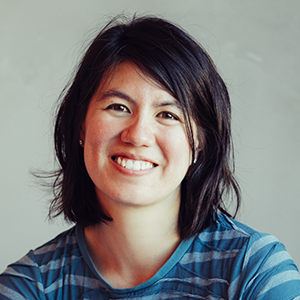 Grace Kuo is a research scientist in the Display Systems Research team at Meta where she works on novel display and imaging technology for virtual and augmented reality. She’s particularly interested in the joint design of hardware and algorithms for imaging systems, and her work spans optics, optimization, signal processing, and machine learning. Kuo’s recent work on “Flamera”, a light-field camera for virtual reality passthrough, won Best-in-Show at the SIGGRAPH Emerging Technology showcase and received wide-spread positive press coverage from venues like Forbes and UploadVR. Kuo earned her BS at Washington University in St. Louis and her PhD at University of California, Berkeley, advised by Drs. Laura Waller and Ren Ng.
Wednesday February 5
Prime Video: a Differentiated Viewing Experience
Gérard Medioni, vice president and distinguished scientist, Amazon Prime Video & Studios
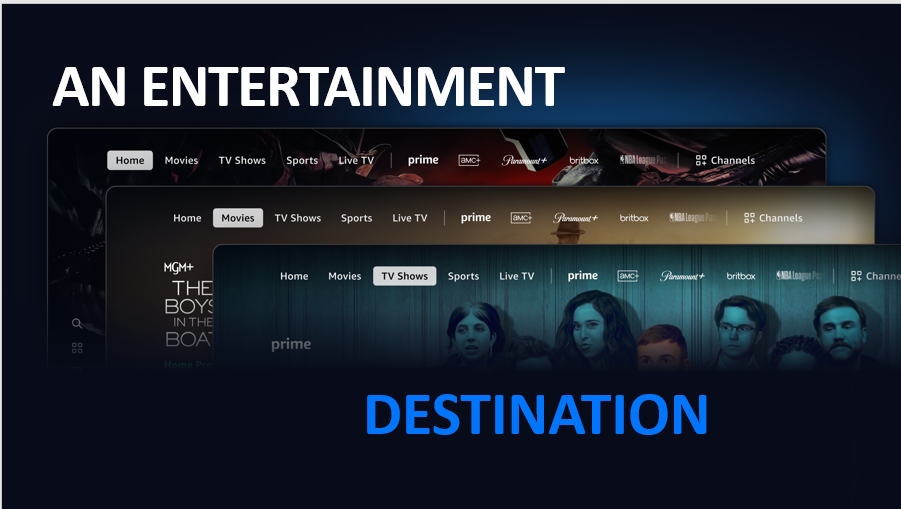 Abstract: This talk presents an overview of the technology components powering the Prime Video customer experience.
Going beyond title level information, we segment the video into shots and scenes, parse each scene to infer semantic content, and use it for a number of applications, such as content moderation, subtitles, dubbing, audio descriptions. We also augment the original content with artwork and video clips, provide cast and music recognition in X-Ray, all of which feed into the recommendation presentation. The talk ends with a presentation of AI-powered innovative features in live broadcast of sports events.
Abstract: This talk presents an overview of the technology components powering the Prime Video customer experience.
Going beyond title level information, we segment the video into shots and scenes, parse each scene to infer semantic content, and use it for a number of applications, such as content moderation, subtitles, dubbing, audio descriptions. We also augment the original content with artwork and video clips, provide cast and music recognition in X-Ray, all of which feed into the recommendation presentation. The talk ends with a presentation of AI-powered innovative features in live broadcast of sports events.
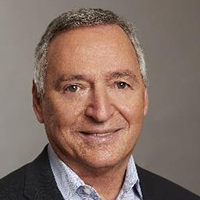 Gérard Medioni is a member of the leadership team for Amazon Prime Video & Studios group. Prior to joining Prime Video, Medioni was responsible for leading AI and computer vision-based research efforts powering Amazon’s Just Walk Out technology and the Amazon One palm recognition service that combines cutting-edge biometrics, optical engineering, generative AI, and machine learning to deliver a new means of identification, entry, payment, and age-verification.
The recipient of several prestigious awards recognizing his contributions to both academia and industry, Medioni is a Fellow of the National Academy of Inventors, ACM, IAPR, IEEE, AAAI, and AAIA and is a member of the National Academy of Engineering. He received the IEEE PAMI Mark Everingham Prize and APSIPA Industrial Distinguished Leader award, and serves on the advisory board of the IEEE Transactions on PAMI and the Image and Vision Computing journal. He is the Vice President of the Computer Vision Foundation. The
author of four books, more than 90 journal papers and 280 conference articles, and the recipient of 121 patents, he is also the editor, with Sven Dickinson, of the Computer Vision series of books for Springer and serves as co-chair of many technical conferences (CVPR, ICPR, ACCV, WACV, ICPR).
Medioni is Professor Emeritus of Computer Science at USC, where he served as the Computer Science Department Chair from 2001-2007. Prior to joining Amazon in 2014, he consulted with numerous companies and startups. He received his Diplôme d’Ingenieur from ENST, Paris, and MS and PhD from USC.