Tuesday 24 June 2025
SHORT COURSES
The Short Course Program starts at 8:45 and goes until 18:30, after which is the Welcome Reception. View the Short Course tab for a full listing of classes.
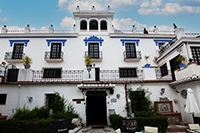
19:30 – 21:00
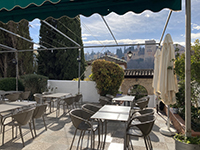
Join colleagues for a welcome drink and snacks at a lovely venue in the heart of the Albaicín, Granada's enchanting and historic neighborhood of winding cobblestone streets and lovely views. Exact location provided to attendees in the Welcome Memo.
Wednesday 25 June 2025
9:00 – 10:00
Session Chair: Carolina Gustafsson, Stiftelsen Föremålsvård i Kiruna (Sweden)
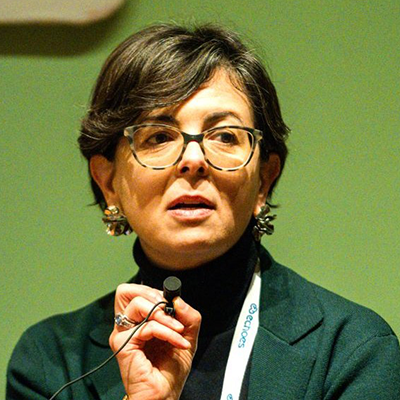 Advancing Heritage Science: European Breakthrough Initiatives Driving Digital Innovation in Cultural Heritage
Vania Virgili, director-level research technologist, Institute for Heritage Science, National Research Council of Italy (ISPC CNR), and appointed director general, European Research Infrastructure for Heritage Science (E-RIHS ERIC) (Italy)
Advancing Heritage Science: European Breakthrough Initiatives Driving Digital Innovation in Cultural Heritage
Vania Virgili, director-level research technologist, Institute for Heritage Science, National Research Council of Italy (ISPC CNR), and appointed director general, European Research Infrastructure for Heritage Science (E-RIHS ERIC) (Italy)
Abstract: The digital transformation of heritage science is essential for improving analysis, preservation and transmission of cultural assets. The European Research Infrastructure for Heritage Science (E-RIHS) is at the forefront of this transformation, aiming to integrate physical and digital access to cutting-edge techniques and resources. Through its unique catalogue of services, E-RIHS includes four research platforms. ARCHLAB provides access to physical and digital archives, including datasets, reports, and reference materials from museums and research institutions. FIXLAB grants access to large-scale research equipment for advanced diagnostics and archaeometry, offering high-resolution 2D/3D imaging and spectroscopic analyses. MOLAB is a mobile lab for in-situ, non-invasive diagnostics of immovable heritage objects. Among others, it includes advanced imaging and image processing techniques such as multispectral, spatial, and 3D imaging. On top of this, a key opportunity is the current development of E-RIHS DIGILAB. DIGILAB is designed to manage, share, and enable the creation of new knowledge from data produced by ARCHLAB, FIXLAB and MOLAB. Its conceptual model ensures seamless dataflow, linking research questions, methods, instruments, data production, analysis and interpretation, and knowledge. DIGILAB leverages the heritage digital twin concept to offer cutting-edge data-driven services. National projects in France, Italy, Poland and Slovenia contribute to its development to foster the growth of the E-RIHS community. In this context, E-RIHS strengthens the vision of a cohesive digital ecosystem for heritage science with the European Cloud for Heritage OpEn Science (ECHOES), a key initiative in developing the EU’s Cultural Heritage Cloud, connecting institutions and professionals across Europe.
10:00 – 12:00
Session Chair: Yoko Arteaga, NTNU (Norway)
10:00
The HYPERDOC database is a publicly available hyperspectral imaging resource for the analysis of historical documents and mock-ups of inks and pigments. It consists of 1681 hyperspectral datacubes, containing millions of reflectance spectra, covering the VNIR (400–1000 nm) and SWIR (900–1700 nm) spectral ranges, including different ink recipes and documents from the 15th to 20th centuries, preserved in two archives in Granada, Spain. We will present the data acquisition process and structure of the database, followed by a live demonstration of its functionality, guiding participants through its use. Additionally, three applications of the database will be summarized, including document binarization, ink classification using machine learning techniques, and ink aging analysis. The HYPERDOC database facilitates the integration of advanced imaging techniques into document analysis and preservation, contributing to the non-invasive study of historical materials.
10:15
The digitisation of analogue film is critical for cultural heritage preservation, as film deteriorates over time due to environmental factors and analogue projectors are becoming obsolete. Conventional RGB scanning methods fail to fully capture the spectral complexity of film, making multispectral imaging (MSI) a feasible alternative. However, MSI faces challenges due to the limited availability of narrow-band LEDs in certain spectral regions and inherent variability in LED emissions. Aiming to minimise colour reproduction errors in film scanning, this study investigates the optimisation of LED spectral band selection and the impact of LED spectra variability. Informed by the optimised bands, multiple market-based LED sets were further evaluated using MSI capture simulations, with the 7-band and 8-band setups achieving good colour accuracy and showing rather low sensitivity to LED spectral variability. A physical multispectral capture of a film photograph demonstrated a good agreement between the capture simulation and the real results.
10:30
Hyperspectral imaging has been widely and consistently applied in the field of Cultural Heritage for material identification. In the specific context of historical document analysis, it is frequently supported and complemented by additional analytical techniques. In this study, we propose a straightforward method for material identification that combines adaptive direct identification—using a reference library of visible and near-infrared spectral reflectance data for pigments—with a KNN classifier applied to an extended spectral range for inks and supports. The method has demonstrated a high degree of accuracy, successfully identifying materials present in both actual historical documents and mock-ups created following medieval techniques. Its performance is illustrated through three spectral image fragments extracted from the HYPERDOC project database.
Coffee Break / Exhibits Open
10:45 – 11:30
11:30
Hyperspectral imaging (HSI) has been widely used in the conservation studies of various cultural heritage (CH) objects, e.g., paintings, murals, and handwritten historical manuscripts. In this work, HSI is used to study painted historical maps, i.e., five maps of the Scandinavia region from the Ortelius collection preserved at the National Library of Norway in Oslo. Given knowledge of their colour application and usage, HSI-based pigment identification is performed, assuming several spectral mixing theories, i.e., pure pigments, subtractive, and additive mixing models. The obtained results are discussed, showing both the pure pigment and subtractive mixing model to be suitable for pigment identification in the case of watercolour applied on paper substrate.
11:45
While spectral imaging has now been being utilized in cultural heritage for more than 20 years, there is still a lack of uptake by heritage practitioners. While some point to cost as an issue, it appears the real concern is that of communicating effectively with interested users – conservators, curators, scholars, heritage professionals. Many people are not aware of the range of types of information and data that can be captured and made available from collections, and the potential ease of interacting with the datasets. Since spectral imaging is essentially the next element of digitization and making heritage available in the digital realm, it seems necessary for more effort to be placed on shared knowledge of the spectral capture and processing methodology, so this becomes more accessible as a tool. Setting up a new spectral imaging system, communicating and creating networks for engagement, and addressing opportunities and challenges will be discussed.
12:00 – 12:45
Session Chair: Lien Acke, J. Paul Getty Museum (US) and University of Antwerp (Belgium)
12:00
As 3D Imaging for cultural heritage continues to evolve, it's important to step back and assess the objective as well as the subjective attributes of image quality. The delivery and interchange of 3D content today is reminiscent of the early days of the analog to digital photography transition, when practitioners struggled to maintain quality for online and print representations. Traditional 2D photographic documentation techniques have matured thanks to decades of collective photographic knowledge and the development of international standards that support global archiving and interchange. Because of this maturation, still photography techniques and existing standards play a key role in shaping 3D standards for delivery, archiving and interchange. This paper outlines specific techniques to leverage ISO-19264-1 objective image quality analysis techniques for 3D color validation, and methods to translate important aesthetic photographic camera and lighting techniques from physical studio sets to rendered 3D scenes. Creating high-fidelity still reference photography of collection objects as a benchmark to assess 3D image quality for renders and online representations has and will continue to help bridge the current gaps between 2D and 3D imaging practice. The accessible techniques outlined in this paper have vastly improved the rendition of online 3D objects and will be presented in a companion workshop.
12:15
This article explores the multidisciplinary process behind the restoration and digitisation of Willem Witsen’s painter’s coat—an object of both artistic and historical value. Using techniques such as photogrammetry, 3D modelling, and 360-degree photography, the project aimed to digitally preserve the fragile coat while making it accessible to both researchers and the general public. The result is a high-quality digital surrogate that supports future conservation efforts and storytelling.
12:30
Funded by the Helen Hamlyn Trust, ARCHiOx – Analysis and Recording of Cultural Heritage in Oxford, is a collaborative project which has united Oxford University’s Bodleian Libraries and the Factum Foundation. The Selene Photometric Stereo Scanner was conceived and developed by the latter and has, for the last three years, been piloted at the Bodleian Library. This technology has been used to reveal near-invisible text and artwork from originals from across Oxford University’s collections. Renders created with the Selene PSS, have revealed what is difficult or impossible to record through conventional photography, and have allowed for the creation of physical facsimiles. This paper serves to demonstrate how Selene recordings have assisted in the research of cultural heritage originals and natural history specimens.
12:45 – 13:10
Session Chair: Laura Ramsey, Metropolitan Museum of Art (US)
Archiving 2025 exhibitors Arkhênum, artefactual, ChannelScience, Iron Mountain Media and Archival Services, Max, NOA, Picturae, and VerusDigital share information about their products/services in short previews.
Lunch Break on Own
13:10 – 14:45
14:45 – 15:15
Session Chair: Lien Acke, J. Paul Getty Museum (US) and University of Antwerp (Belgium)
14:45
Mass 3D digitization of heritage objects is today heavily encouraged by various institutions. This is in an effort to measure and document objects for the future, use them for visualization and dissemination, and open up for the analytic tools that are available for 3D meshes. However, the structure required of a mesh depends heavily on the application, and the data might vary significantly based on the digitizing institution, object characteristics, and acquisition workflow.
In this work, we sample 3D data stored in several major open-access databases for 3D heritage data and analyze the content. We take a close look at sampled mesh structures by computing various graph metrics, check some integrity measures, and evaluate their possible future use. Finally, we provide an overview of the use cases and interoperability of the meshes depending on results from the mesh structure analysis.
15:00
Photogrammetry has greatly improved the recording, preservation, and accessibility of cultural heritage in archaeology and scientific research. The increased use of 3D modeling in heritage projects brings about significant challenges, especially in terms of data management. In this context, the challenges involve ensuring that digital models are reliable, traceable, and usable. Often, these concerns are disregarded until they impede access or reuse, affecting the long-term preservation and accessibility of cultural heritage data.
15:15 – 15:35
Session Chair: Irina-Mihaela Ciortan, NTNU (Norway)
This work presents insights into the imaging workflow from cultural heritage domain experts, gathered from an online survey. Non-invasive 2D imaging technology has become a cornerstone in the analysis and documentation of cultural heritage artefacts. Techniques such as hyperspectral imaging (HSI) and X-ray fluorescence (XRF) can investigate material properties, artistic processes, and conservation states. Existing analysis and visualisation tools offer functionality for specific data types but lack integration for holistic multimodal analysis. To address these limitations, we conducted a structured survey targeting researchers and practitioners in CH working with imaging technology. The survey explores their workflows, imaging technology usage, and software preferences. This study identifies key trends, challenges, and feature requirements.
Multispectral imaging has become an essential tool for the analysis, documentation, and visualization of cultural heritage materials and objects. This study explores the application of this technique to a 15th-century illuminated manuscript held at the Brazilian National Library (Fundação Biblioteca Nacional) in Rio de Janeiro. The manuscript, currently part of ongoing doctoral research, contains erased text due to censorship through scraping. The use of multispectral imaging, incorporating eleven different wavelengths across UV, visible, and IR spectra, proved highly effective in recovering the erased words "pape" and "thoma", thus confirming the hypothesis of scholar Damião Berge regarding the lacunae and linking the codex to a 16th-century historical event.
Non-invasive scientific imaging is increasingly becoming an important research tool in the study of cultural heritage objects, combining sustainability and preservation in a responsible and conscious manner. The purpose of this study is to make a legibility by digital restoration of two drawings by Brazilian modernist artist Guignard, dated 1956 and 1958, respectively, one created with ink and pen nib, and the other presumably with graphite. Both drawings have likely suffered from photodegradation, with almost total loss of visibility due to fading and erasure of the drawn lines. Scientific photography techniques were employed, including IR reflectance photography, visible light photography, UV fluorescence, Multispectral Imaging, transmitted light photography, raking light photography, and Reflectance Transformation Imaging (RTI). These techniques, used in combination, yielded positive results, enhancing legibility and revealing traces and details that were no longer visible to the naked eye.
This paper proposes a method of gloss archiving using normal vectors. When archiving the gloss phenomenon of a material, it is important to record not only the reflected light intensity but also the gloss unevenness. This is because the gloss unevenness greatly affects the texture of the material. However, it has been difficult to quantitatively record gloss unevenness because they are dependent on the viewing direction and lighting. Gloss unevenness on mirror surfaces are mainly caused by irregularities in the normal direction. Therefore, we came up with a solution to archive the gloss unevenness phenomenon by recording the distribution of surface normal vectors. We are currently developing a apparatus to measure the distribution of surface normal vectors. Using this surface normal data, it will be also possible to reproduce gloss unevenness images using Computer Graphics technology.
The 1QIsaa Scroll, one of the most significant manuscripts among the Dead Sea Scrolls, has long been the focus of debate over whether it was produced by a single hand or multiple scribes. In this study, we introduce a column-based writer-identification framework that combines unsupervised clustering, character-level verification, and cross-dataset evaluation, without assuming any fixed number of scribes. Benchmarking our hinge–feature–based approach against the widely recognized FIREMAKER dataset reveals its strengths and weaknesses. This exploratory analysis not only offers fresh insights into 1QIsaa’s scribal attribution but also underscores the need for richer or complementary features in future digital paleographic research.
Coffee Break / Exhibits Open
15:35 – 16:15
16:15 – 17:20
Session Chair: Eryk Bunsch, Museum of King Jan III's Palace at Wilanow (Poland)
16:15
The Swiss National Library (SNL) operates a variety of different digitization projects for different kinds of materials. Besides newspapers, journals and monographies the SNL holds unique collections of writers’ legacy and a great number of objects like posters, plans and drawings. Posters, plans and drawing are most of the time of a larger format than the other objects. The digitization service has a duty to digitize them all. This paper shows the quest to find and utilize equipment large enough to digitize objects that exceed the usual sizes of books and newspapers. This is a case study of the Swiss National Library, and its vendors and equipment are named. It shows the process of getting new equipment and installing new workflows in the SNL for a specific use case of this institution. The SNL does not provide an assessment of the market or any statement on other brands or vendors. This paper is not a reinforcement of any brand or vendor but solely states the choices the SNL has made for herself. It is not to be read as advertising or recommendation of any kind.
16:30
Mobile phone cameras are imaging tools that are rapidly being adopted by various industries due to their portability and ease of use. Though not currently considered an adopted imaging tool for cultural heritage, there has been increased interest in their potential use within the field. To better understand how cultural heritage professionals considered mobile phone cameras as tools for various types of documentation, a survey was created and administered. A survey was designed and sent to cultural heritage groups involved with imaging with the goal of determining whether these types of cameras are practical imaging devices in circumstances where a studio or a DSLR may not be readily available. Initial results have shown a variety of responses and that mobile phones are being used for various types of documentation.
16:45
The National Gallery of Art developed a systematic approach to evaluate and categorize its extensive digital image collection spanning 20 years of technological evolution. This study addresses the challenge of inconsistent image quality resulting from varying capture technologies and methodologies over time. A four-tier rating system was created based on comprehensive analysis of capture devices, technical specifications, and workflow documentation. The system enables efficient assessment of image suitability for different applications while providing clear guidance for re-digitization decisions. The implementation includes integration with the institution's digital asset management system, offering a practical framework that other cultural heritage institutions can adapt for managing legacy digital collections while maintaining current quality standards.
17:00
This year version 2.0 of the Metamorfoze Preservation Imaging Guidelines was published. Version 1.0 was published in 2012. The Metamorfoze guidelines are published by the KB, the National Library of the Netherlands.
Metamorfoze Version 2.0 is a technical and practical update of Version 1.0. And one of the three quality levels is completely rewritten for mass digitization with sheet-fed scanners.
With the technical update Metamorfoze Version 2.0 is in line with ISO 19264-1. With the practical update it is possible to use a broad range of technical targets.
The basic principle of the Metamorfoze guidelines: What you see is what you get, applies to all quality levels of the Metamorfoze guidelines.
17:20
End of day; evening on own.